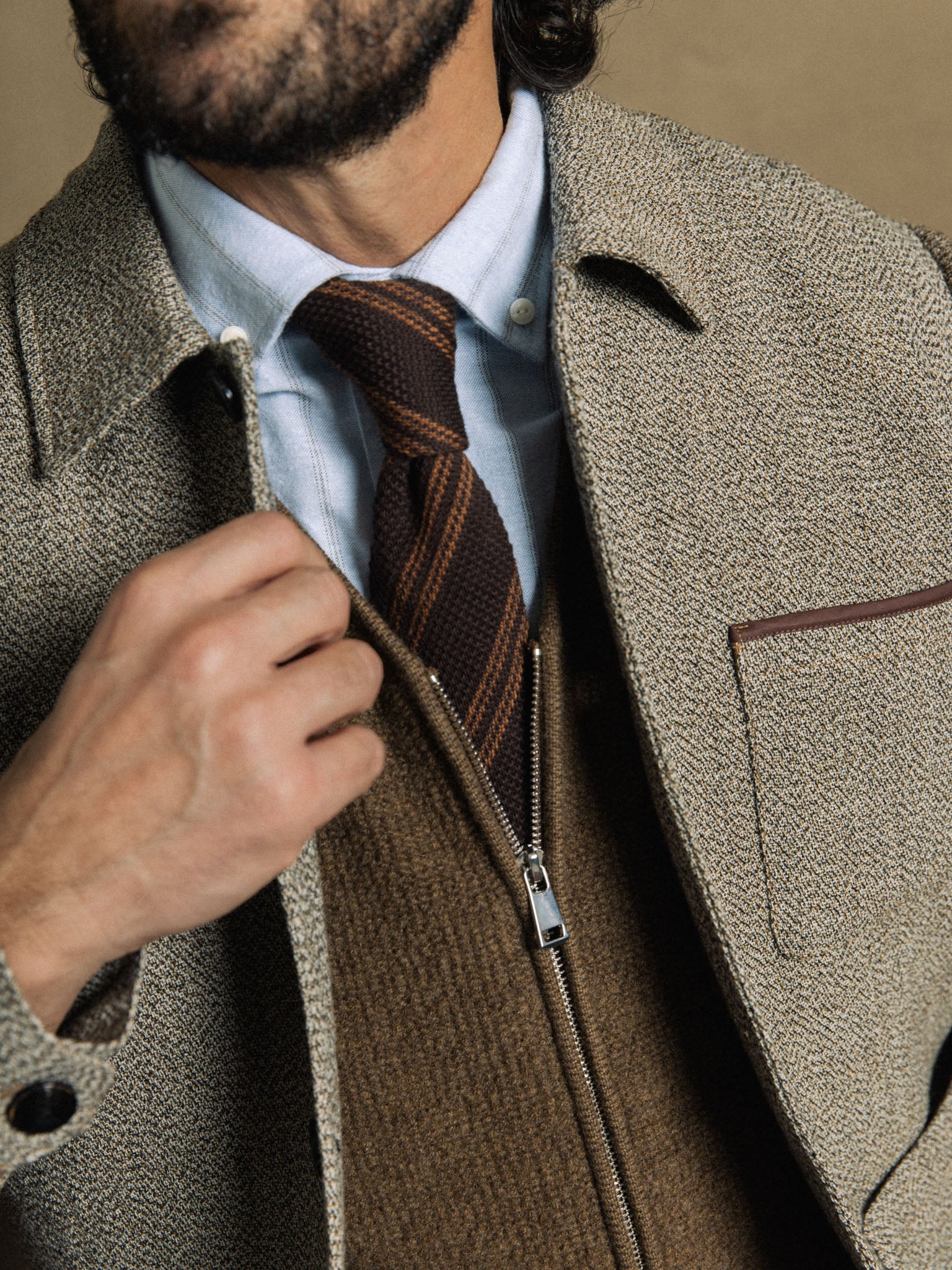
When clothing can be repaired, it enhances circularity by keeping resources in use for as long as possible, reducing waste and environmental impact. Clothing production requires vast amounts of water, energy, and chemicals. By repairing our garments instead of purchasing new ones, we lower the overall carbon footprint.
How to:
— Learn basic sewing and mending: small repairs, such as sewing a button, patching a hole, or reinforcing worn areas, can significantly extend a garment’s lifespan.
— Use tailors and repair services: Many cities have tailors or repair cafés where clothing can be professionally fixed.
— Upcycle and redesign garments: If a piece of clothing is no longer wearable in its current form, it may be transformed into something new, such as a bag, scarf, or cushion cover.
— Choose quality materials: buying high-quality clothing ensures it lasts longer and is easier to repair, making it more circular.
By producing durable, repairable clothing, MOS MOSH contributes to a circular economy in which resources are preserved and environmental impact is reduced—a small effort that makes a big difference.